
泡沫之夏
NZ’s push for joint statement on China missile test falls flat amid growing Pacific Islands autonomy_我的网站

A |
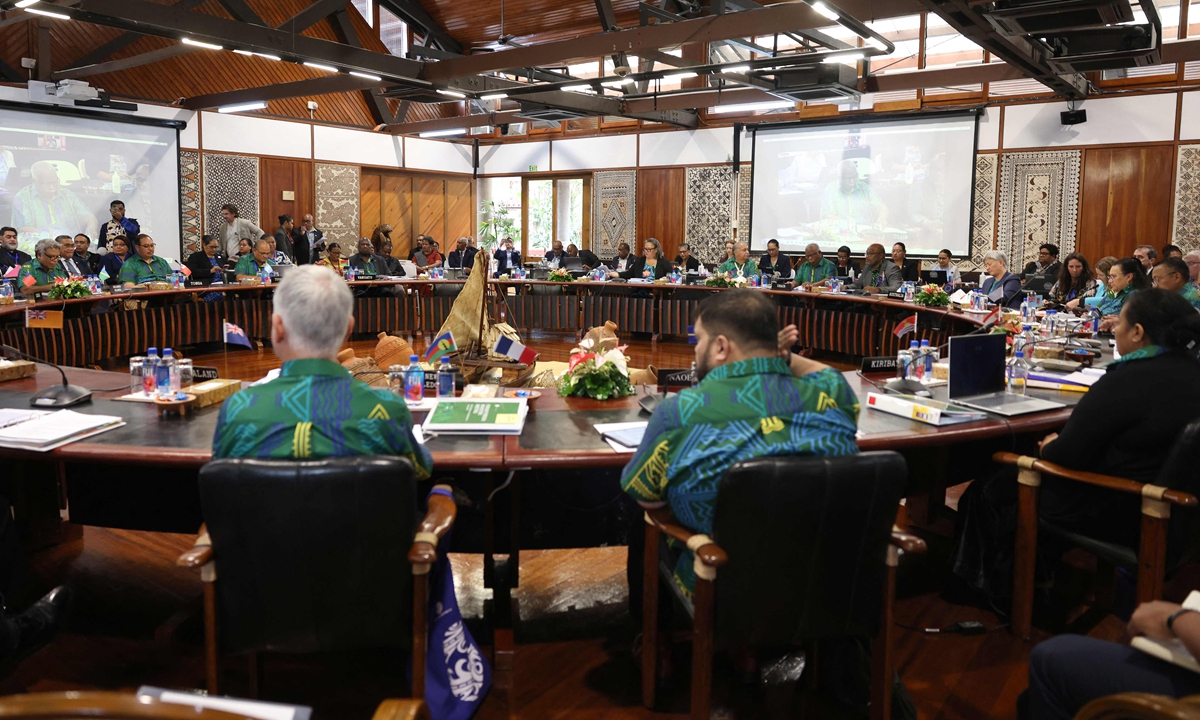
As foreign ministers and senior representatives from Pacific nations convened in Suva for the Pacific Islands Forum (PIF) to discuss key regional issues, New Zealand's foreign minister reportedly pushed to secure a joint statement condemning China's missile tests in July, however, his effort ultimately fell flat. A Chinese expert described the outcome as a clear rebuke to Canberra and Wellington's ingrained habit of speaking for the Pacific, saying the two countries must come to terms with a shifting reality: Pacific Island states are increasingly unwilling to let Australia and New Zealand dictate who their friends, foes and perceived security threats should be.
Pacific Island foreign ministers failed to agree on Friday to a joint response to China's missile launch in July, with further discussions expected at the Pacific leaders meeting at the end of August, said New Zealand Foreign Minister Winston Peters, according to Reuters.
According to a report from Radio New Zealand, there has not been a unanimous statement from Pacific nations about China's test-launch in July, and Peters said New Zealand had been pushing for one. Peters claimed that the Pacific missed an opportunity not to issue a joint statement soon after China's launch.
Australia's Foreign Minister Penny Wong said before the meeting that she hoped China took note of the "very clear response" already sent from the Pacific about the test, according to AFP.
Peters' push for a joint PIF statement on China's missile tests, together with Wong's remarks, are less about technical security concerns than an effort to turn their own anxieties about China into a regional agenda and pressure Beijing under the forum's collective banner. His description of Pacific Island countries' refusal to single out China as a "missed opportunity" also reveals little respect for their independent judgment, Chen Hong, director of the New Zealand Studies Centre, East China Normal University, told the Global Times.
The result is a clear rebuke to Canberra and Wellington's long-standing habit of arrogantly "speaking for" the Pacific, as island states are increasingly unwilling to let Australia and New Zealand decide who their friends, foes or security threats should be, said Chen Hong.
The Chinese People's Liberation Army Navy said on July 6 that one of its strategic nuclear submarines successfully launched a strategic missile toward relevant high seas of the Pacific Ocean, which landed precisely within the designated waters. China notified relevant countries in advance of the test launch, a move that demonstrates the openness and transparency of the Chinese armed forces, Chen Xi, a spokesperson for the Ministry of National Defense, said at a press conference on July 7.
Chen Hong also noted that Peters' recent China-related rhetoric has become increasingly populist and hawkish as elections approach in New Zealand. "Such an approach risks undermining New Zealand's long-standing reputation for pragmatic, independent, and rational diplomacy," Chen Hong said.
In July, during a parliamentary debate on New Zealand's Covid-19 pandemic response, Peters, who is also leader of the populist New Zealand First party, told a Chinese-born lawmaker to "go back to your own country" while mocking his English proficiency. His remarks drew wide criticism in New Zealand.
Yet Australia and New Zealand continued to amplify missile-related issues and great-power rivalry, pushing the "China threat" narrative to the center of the regional agenda while sidelining the priorities that matter most to Pacific Island nations, said Chinese analysts.
Chen Hong noted that for island states, the most urgent concerns are not geopolitical competition but everyday challenges: climate change, energy security, development financing, infrastructure and economic resilience. By shifting the focus from these concerns to strategic rivalry among major powers, Australia and New Zealand risk distorting the region's real priorities and undermining the aspirations of Pacific Island countries.
According to an introduction on the forum website, "The Forum's Pacific Vision is for a resilient region of peace, harmony, security, social inclusion and prosperity, so that all Pacific people can lead free, healthy, and productive lives."
At the opening of the meeting, Rick Houenipwela, foreign minister of the Solomon Islands and chair of the meeting, said that the Pacific's agenda must continue to be "conceived by the Pacific, shaped by the Pacific and only by the Pacific," according to Reuters.
Chen Hong said Pacific Island nations have made their position clear: differences with China do not mean signing up to the strategic agendas of Australia and New Zealand. A growing number of island countries refuse to be trapped in the black-and-white binary choice of siding with either China or the West.
If Canberra and Wellington keep pushing rhetoric beyond the regional consensus, they risk undermining the very institution they claim to support. The PIF's strength lies not in issuing confrontational statements, but in preserving Pacific unity. Turning that consensus into a tool for pressuring China would erode the forum's cohesion and weaken its central role in the region, said Chen Hong.
。 据报道,当地时间周三,德国汽车制造商宝马公司表示,他们将投资17亿美元在美国生产电动汽车,这是一家大型汽车制造商关于提升在美国的电动汽车产量的最新消息。宝马集团董事长奥利弗·齐普策(Oliver Zipse)在接受采访的时候表示:“这是迄今为止我们所做的规模最大的单项投资。”南卡罗来纳州州长亨利·麦克马斯特(Henry McMaster)在一个仪式上说,宝马的资本投资是该州历史上规模最大的一次。宝马还表示,中国可再生能源集团远景的汽车能源供应公司(AESC)也将在南卡罗来纳州建立一个新的电池芯工厂,年产能达30GWh,该公司将为宝马供应电池芯。

B | 这家豪华汽车制造商计划在2030年时,在美国至少生产六款纯电动宝马车型。宝马公司表示,他们不会确定停止生产燃气动力汽车的日期,这引起了人们对美国新的电动车税收优惠要求的担忧,该要求旨在要求车企停止使用来自中国的电池部件和矿物。齐普策表示,没有一个地区可以完全独立,特别是在电池原材料方面,美国“应该制定一个现实的规定”。他警告说,8月通过的新的7,500美元电动车税收抵免法可能导致多家汽车制造商无法享受优惠政策。他说道:“如果你阻止了行业发展,这将是一场灾难。”宝马表示,其新的电池规格将把能量密度提高20%以上,提高充电速度,并将续航能力提高30%。宝马集团此前已经宣布,将在欧洲和中国增建四个电池芯工厂,以满足其需求。齐普策表示,计划中的第六家电池厂的位置将由市场需求决定。这些由宝马合作伙伴也建设的电池工厂的年产能将达到20GWh。宝马在南卡罗来纳州有30年历史的工厂已经生产了600多万辆汽车,该工厂雇用着超过1.1万名员工,年产量高达45万辆。南卡罗来纳州向斯巴达堡工厂提供了6500万美元的赠款,以协助支付与该项目有关的费用。
Current article:http://y6r.roubutianquegumaigoubingdian.cyou/news/20260826_154.html
Published on:07:50:12
栏目相关
- 63岁美国网红奶奶宣布“怀孕”,26岁丈夫笑得合不拢嘴,却引质疑
- 三星S10系列价格曝光:通用版4800元,5G版10000多
- Counterpoint:苹果 iPhone 17 成为 2026 年 Q2 全球最畅销智能手机
- 麦迪签下阿迪达斯千万合约 取50万现金肆意打滚
- 版本间隔 4 周 → 2 周:微软加速 WebView2 Runtime 更迭,和 Edge 浏览器同步更新
- 外媒:加沙哈马斯领导人下落成谜
- 特斯拉中国建筑工程公司招聘员工,中国汽车公司前合伙人硅谷挖掘麝香
- 结束45年钢炮历史 海外福克斯ST停止接受订单 11月正式停产
- 南通大学杏林学院昆韵予安实践团开展“寻迹名贤风骨,赓续泰州文脉”主题实践活动
- 罗永豪回应朝宝的名字泰图:文豪的名字不会改变
- 3999起!华为Mate50系列如约而至,但只推荐三款_Pro_方面
- 连续四季不涨反跌!英伟达今夜放榜 该如何克服财报“魔咒”?
热门排行
- 大调整!iPhone 15 Pro Max或改名为iPhone 15 Ultra_系列_机型
- 新推出的Tremolo产品“multi flash”被微信屏蔽,会议很尴尬。
- Georgetown coach Tasha Butts dies after 2-year battle with breast cancer
- 美国宣布对电动汽车等中国商品加征关税,中方作出回应
- 抚顺市与国网辽宁省电力有限公司进行工作会商
- Celina Jaitly Approaches Mumbai Court With Domestic Violence Case Against Husband Peter Haag
- 杭州半导体龙头,回撤800亿
- 麝香:载人飞船的首次飞行是极其危险和激烈的。
- 北摩高科:拟1.2亿元—1.8亿元回购股份
- 二十五载汉语为桥 五洲青年厦门逐冠
- 诚信尚俭 共享“食安”
- 【现货】8月26日各地区现货铝价格汇总